
Cats and carriers: prepare for a calmer vet visit
A familiar carrier, a planned journey and a calm return home: practical steps for taking your cat to the vet at a pace they can manage.
The appointment is approaching, and you can already picture the search for the carrier, the cat under the bed and the hurried departure. A planned veterinary visit can begin differently: check the equipment, organise the journey and learn how your cat responds. The aim is a calmer visit, without promising that every worry will disappear. Here is a practical route through the day that you can adapt with your veterinary team.
Start with a carrier you can use easily
International Cat Care recommends a sturdy plastic carrier with a removable top. This lets the vet reach your cat without pulling them through a small opening. Support the base as well when carrying it, to reduce swinging.[en-1]
Try the fastenings while the carrier is empty. Can you remove the lid and put it back securely? Do both people who might accompany your cat know how it works? This small rehearsal helps you discover an awkward clip in your living room rather than at reception. Keep the instructions for your particular model somewhere you can find them again.
Explore first, close the door later
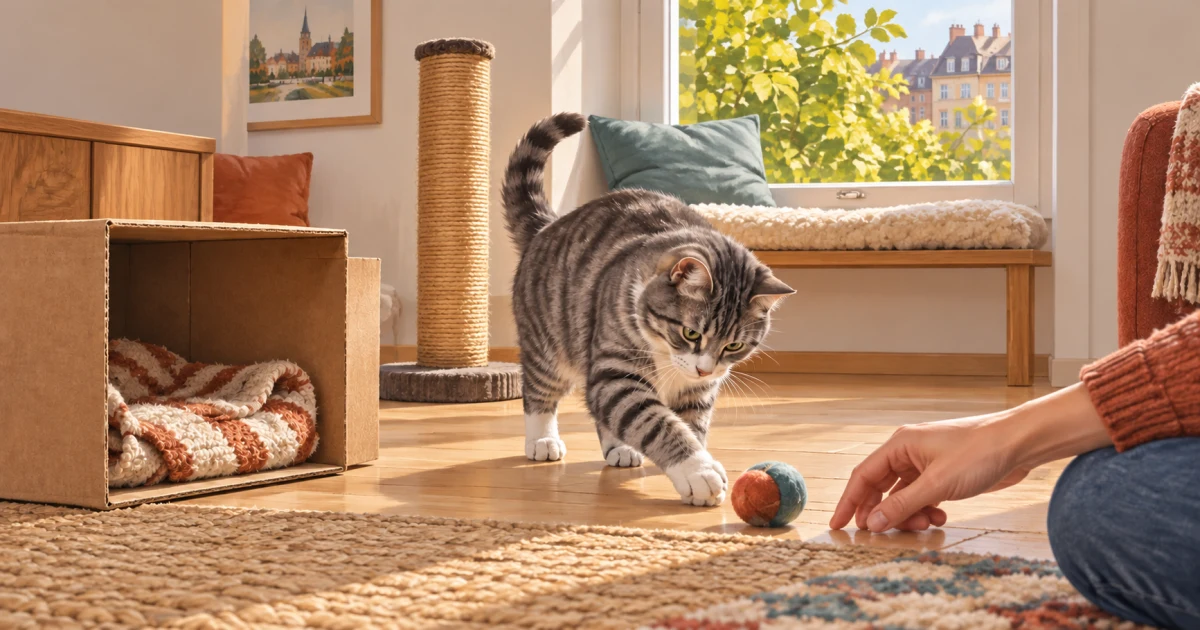
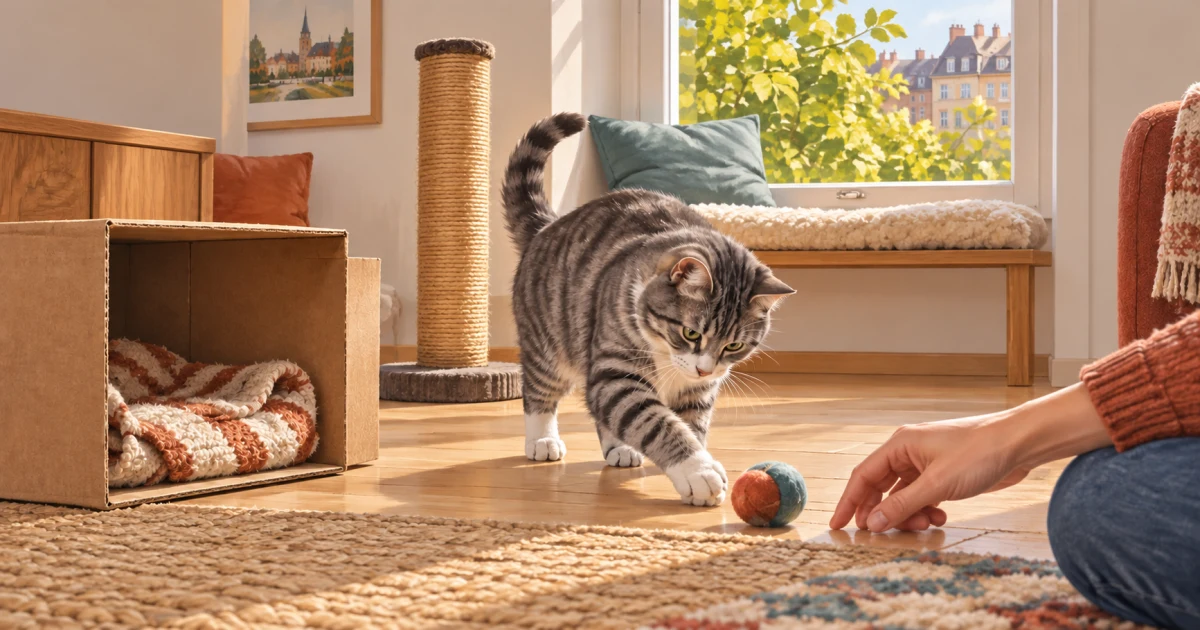
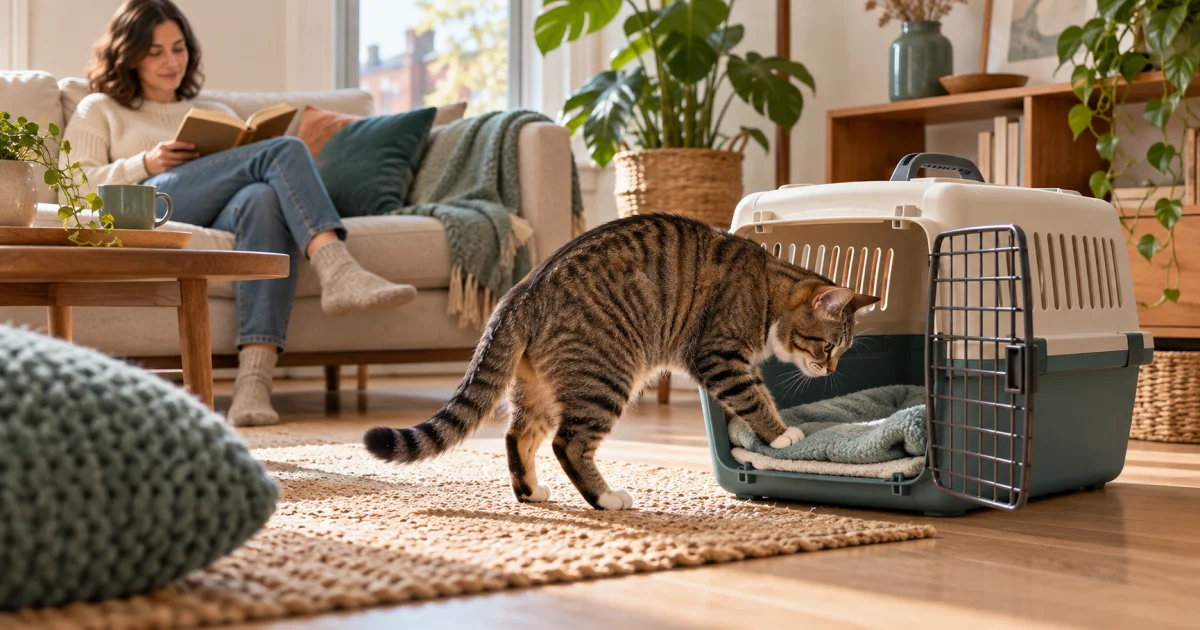
Leave the carrier open in a quiet place with familiar bedding. Cats Protection suggests gradual steps: exploring, going inside, feeling comfortable, then learning to accept the closed door and being carried. If your cat becomes worried, return to an easier step.[en-2]
For example, your first aim might simply be for your cat to approach the carrier. Record what actually happened: ‘put one paw inside’ is more useful than ‘failed’. Your short notes do not need deadlines. They give you a starting point for the next session, so you can remember what you tried instead of starting from a vague impression of how things went.
Prepare for the appointment too
Ask whether a quieter time is available for a planned appointment. Put your most important questions first on your list. Cats Protection cautions against neglecting care because visits feel stressful; report changes in your cat’s health or behaviour.[en-3]
You could gather the reason for the appointment, your observations and questions about the journey in a single note. Also ask for any instructions specific to this visit, including food: do not improvise a fasting routine from an online tip. If your cat needs urgent care, call the practice immediately to arrange transport rather than waiting until carrier training is complete. Preparation should help you reach care, not become another reason to delay it.
Keep the journey straightforward
Your cat stays inside the closed carrier during the journey, with the carrier secured in place. Cats Protection recommends good ventilation, a comfortable temperature and never leaving your cat alone in the car. If you need a taxi, check in advance that it accepts animals.[en-4]
Look up the route and parking before you leave. Ask about positioning your particular carrier in your vehicle, and follow the manufacturer’s instructions. For a first visit, saving the practice’s address and phone number means you will not have to search for them at the last moment. Give these details to the person accompanying you if you are driving.
Ask where you can wait
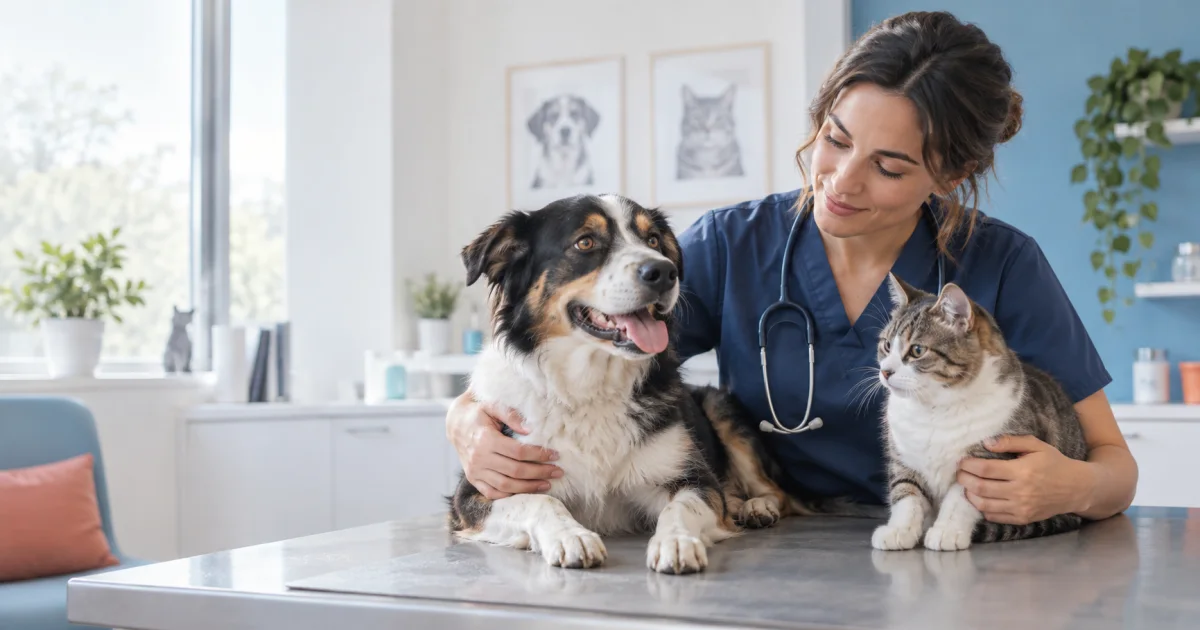
FelineVMA’s Cat Friendly approach describes separate waiting areas for cats, or alternatives such as going straight into an examination room. A stable, designated raised surface for the carrier can also avoid having to place it on the floor near other animals.[en-5]
Facilities vary between practices, so ask reception what is possible there. A simple sentence is enough: ‘My cat finds being near dogs difficult; where could we wait?’ Preparing that request gives you a specific action on arrival. You do not have to work out what to say while also trying to remember everything you wanted to discuss at the appointment.
Notice an unexpected change
A cat who suddenly becomes more fearful needs veterinary advice: Cats Protection notes that pain or illness may contribute to the change. The organisation also recommends respecting a cat’s pace and avoiding forced interactions.[en-6]
When describing a difficulty, identify the precise moment: when the carrier appears, when its door closes or once you are in the vehicle. Note when this started and what has changed. Those observations help you ask a clear question; they are not a diagnosis. If practising remains difficult, ask for an individual plan before your next journey rather than trying to solve everything during the departure itself.
Plan for coming home
After a visit, your cat may smell different and other cats at home may react. FelineVMA recommends gradually resuming contact. If tensions arise, provide a separate room with your cat’s essentials and follow your vet’s advice.[en-7]
Before leaving the practice, clarify the instructions for home and which number to call if you are unsure about anything. Once home, add one thing that worked well and one point to discuss to your notes. You can use this preparation again. The next appointment will start with a few concrete reference points, rather than a carrier that you have to rediscover at the very last moment.
Sources and context
Sources consulted on 30 September 2026. General guidance from veterinary and animal-welfare organisations; UK transport rules are not applied to Belgium. Follow your vet’s instructions for your own cat’s needs.
- International Cat Care, Taking your cat to the veterinary clinic ↩
- Cats Protection, Choosing and using a cat carrier ↩
- Cats Protection, 12 tips to make vet visits less stressful for your cat ↩
- Cats Protection, Travelling with your cat ↩
- Feline Veterinary Medical Association, What to expect at a Cat Friendly Practice ↩
- Cats Protection, Shy cats: how to help your cat relax ↩
- Feline Veterinary Medical Association, Visiting Your Veterinarian ↩