
Fireworks: keeping your dog and cat safe on New Year’s Eve
Local rules, a safe haven at home, a planned evening and checked identification: practical pointers for getting through the end-of-year celebrations with a noise-sensitive pet.
Every year the bangs come back, sometimes several nights in a row. For many dogs and cats this is no party: it is sudden noise, bright flashes and an urge to run. You cannot stop the fireworks in your neighbourhood, but you can prepare your home, the evening and your pet’s identification. Here is a plan to adapt with your vet.
Why it pays to plan ahead
The City of Brussels points out that pets perceive bangs and flashes as threats, which can lead to panic, escape or injury.[en-1] The Walloon Animal Welfare Council also recognises the harmful effect of fireworks on pets and wildlife.[en-2]
A panicking animal does not think about the door it runs through or the road it crosses. That is why preparation matters more than how you react on the night. A few weeks are enough to set up a safe haven, check doors and windows and update contact details. If your pet was very frightened last year, this is also the right time to talk to your vet.
Know your local rules
In the Brussels-Capital Region, setting off fireworks is banned everywhere, including on private land.[en-3] The City of Brussels states that setting off fireworks or bangers outside authorised displays can lead to a fine of up to 500 euros per offence.[en-1]
In Wallonia and Flanders there is no general ban: the rules vary from one municipality to the next.[en-4] They can also change from year to year. Check your municipality’s police regulations or ask your local police station. Even where private fireworks are banned, an authorised display or illegal fireworks are still possible, so prepare your pet either way.
Set up a safe haven before the holidays
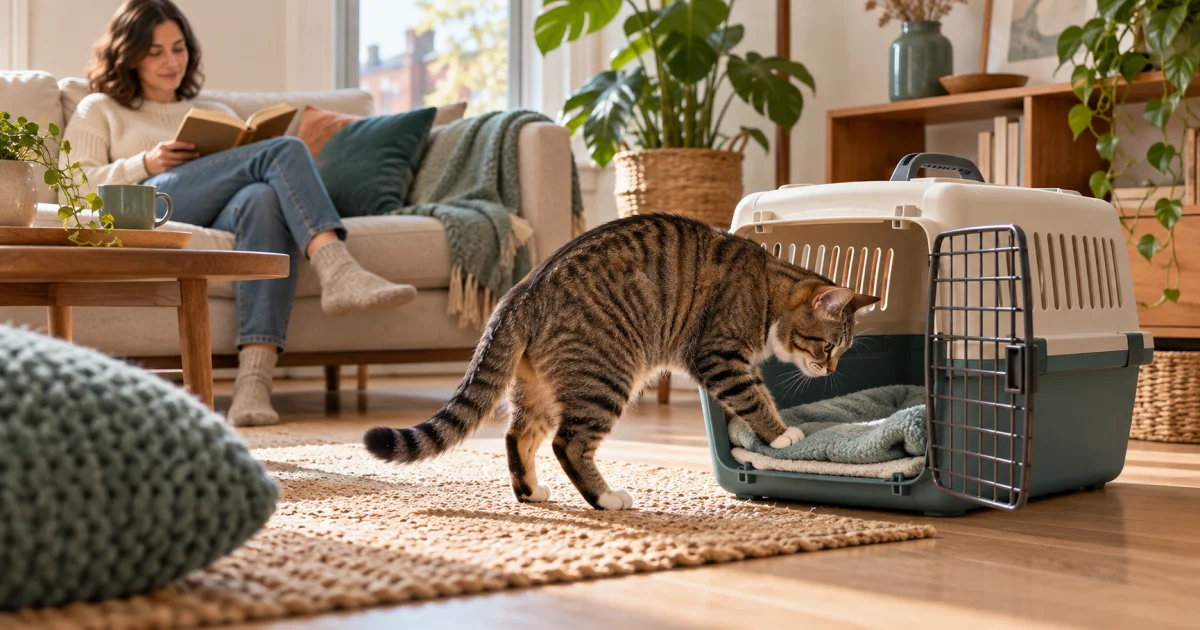
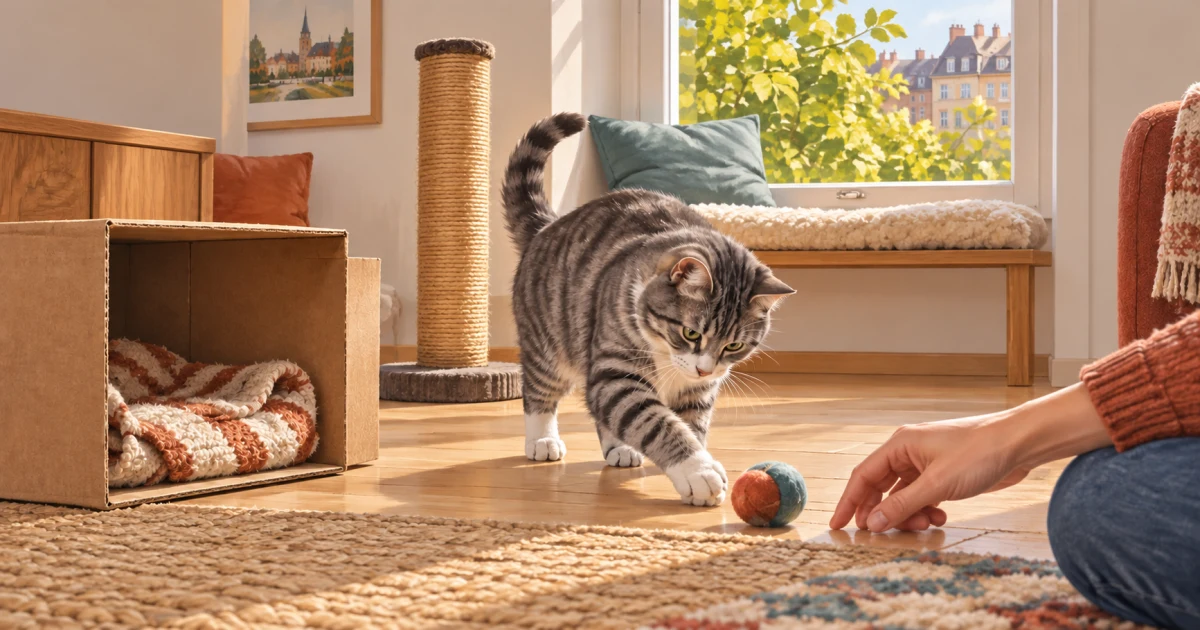
The RSPCA advises giving your dog a safe space with their toys and bedding, which they can reach at any time, even when you are out. For cats, it suggests a place where they already feel secure, up high or in a box, plus other hiding places they can leave freely.[en-5]
Cats Protection recommends leaving a litter tray, food and water available when your cat is kept indoors. The charity also notes that some cats become more stressed if they are shut in a single room.[en-6] Set up the haven several days in advance, where your pet already likes to rest, so it feels familiar before the first bang.
Plan the day and the evening
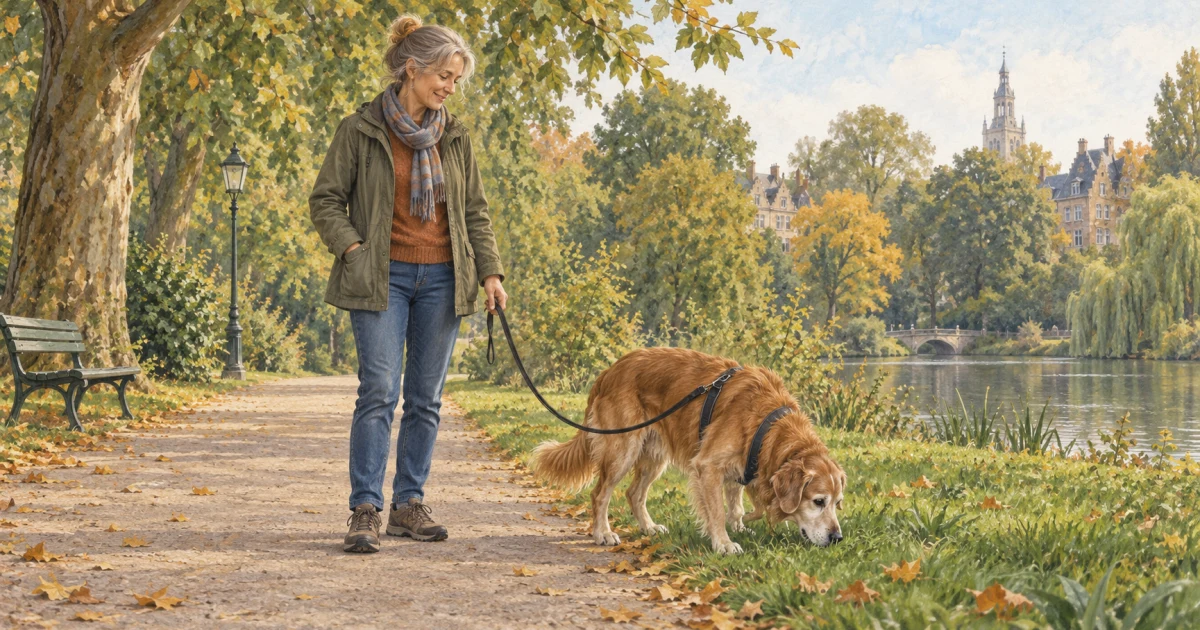
Walk your dog during the day and get home before fireworks are likely to start.[en-5] The City of Brussels advises bringing pets in at dusk, closing shutters and curtains and switching on the radio or television.[en-1] Dogs Trust also suggests turning the lights on to soften the flashes.[en-7]
For cats, Cats Protection suggests keeping them indoors after dark, closing doors, windows and the cat flap, and blocking off any gaps where they could get stuck.[en-6] Warn your guests: a front door left open for a moment is all a frightened animal needs. If your dog has to go out in the evening, keep them on a lead, even in a neighbourhood they know well.
During the fireworks, let your pet choose
The RSPCA advises letting your pet hide or pace, without trying to coax them out of their hiding place, and never punishing them for being afraid.[en-5] Dogs Trust recommends staying calm, not leaving your dog alone and offering quiet comfort if they seek it.[en-7]
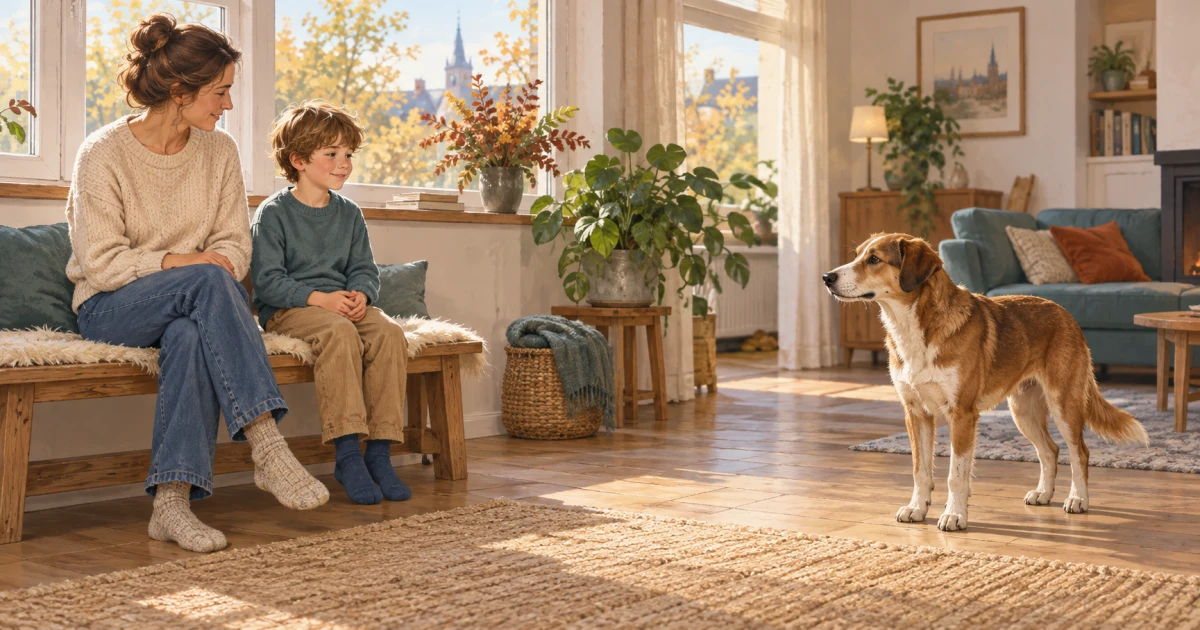
For cats, Cats Protection explains that picking them up or cuddling them while they are stressed can make their fear worse: give them space and they will come to you when they are ready.[en-6] In both cases, stay nearby and keep to your usual routine. Soft music or the television at a moderate volume masks some of the noise outside.
Check identification before the evening
The City of Brussels asks owners to make sure their pets are identified: microchip, tag and an up-to-date database.[en-1] In Belgium, dogs and cats are registered in the official DogID and CatID registers.[en-8] Check that the address and phone number linked to the microchip are still correct: Cats Protection points out that this is what allows a lost pet’s owner to be found.[en-6]
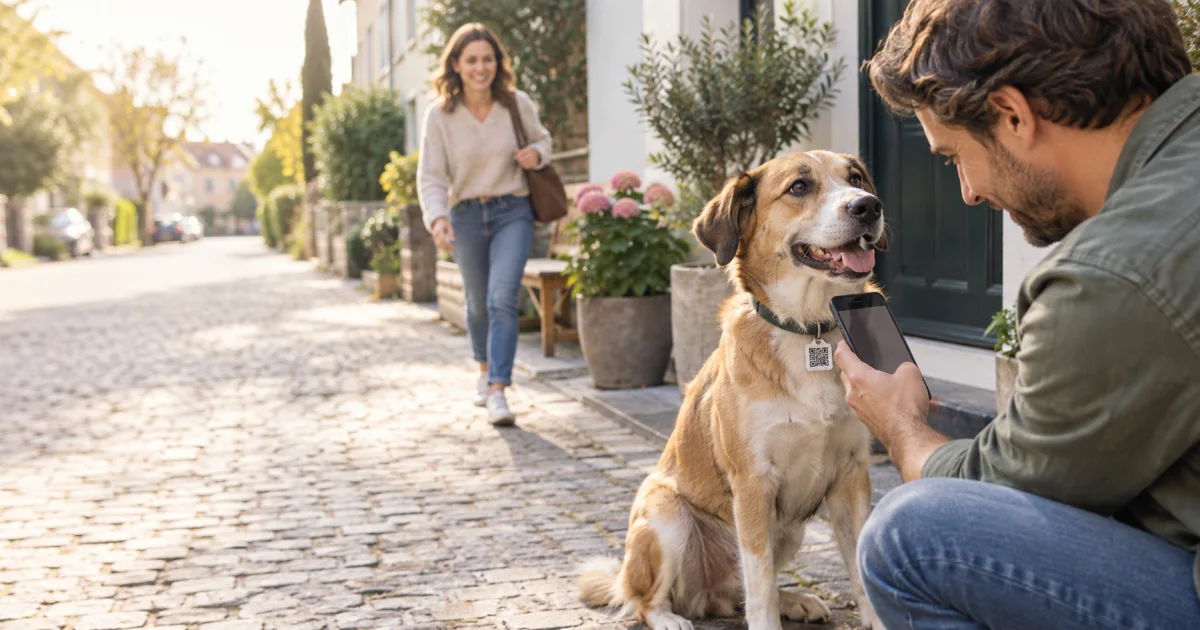
A microchip can only be read with a suitable scanner. A readable tag on the collar helps whoever finds your pet in the street. A UFoundMe! tag is one such option: scanned as a QR code, or tapped with a smartphone via NFC depending on the model, it opens the pet’s digital card and lets the finder message the owner without the owner’s contact details being shown. It is not a GPS tracker and it does not replace official registration. If your pet does escape, our article When a pet goes missing: understanding DogID, CatID and UFoundMe! explains the steps to take.
Getting ready for the big night with a UFoundMe! tag
If your pet wears a UFoundMe! tag, take five minutes in the days before. Scan the tag yourself to check that it opens the card, then update the photo and the useful information, for example “scared of bangs, do not chase, call gently”. Check that the tag is firmly attached to the collar or harness. With the Protection service, add someone close who can be reached on New Year’s Eve to your trust circle: they will be alerted if someone finds your pet while you are busy. If your pet does escape, with the Protection service, the “Report lost” button in your Studio prepares an A4 poster with their photo and the card’s QR code in seconds, and the finder can message you in their own language. Either way, they never see your contact details.
When fear is severe, talk to your vet
Dogs Trust lists signs of fear such as whining or barking, panting, a lowered tail, trembling, trying to escape or loss of appetite. Some of these signs can also point to a health problem: your vet can rule out a medical cause, refer you to a behaviourist or consider treatment, which some dogs need to start before the holidays.[en-7]
The RSPCA and Cats Protection mention pheromone diffusers, to be plugged in a few weeks ahead after talking to your vet.[en-5][en-6] In the longer term, the RSPCA describes gradual training with recordings of firework sounds, started well before the season.[en-5] Never give medication without a prescription: that decision belongs to the vet who knows your pet.
After the evening, back to normal
Return to your usual routine as quickly as possible and keep an eye on your pet over the following days.[en-7] For cats, the RSPCA suggests a treat or their favourite meal, attention if they ask for it and keeping to their routine.[en-5]
If the fear persists, or was stronger than last year, write down what happened: the time, the behaviour, what helped. These notes are not a diagnosis, but they will help you and your vet prepare a suitable plan for next New Year.
Sources and pointers
Sources consulted on 26 October 2026. Fireworks rules depend on the Region and the municipality and can change every year: check the police regulations that apply to you. The UK advice quoted here is general animal-welfare guidance, not Belgian law. Your vet’s advice always comes first for your pet’s needs.
- City of Brussels, How to protect animals from fireworks (French page) ↩
- Walloon Animal Welfare Council, Opinion on fireworks, 19 December 2022 (French) ↩
- VRT NWS, Which fireworks can you still buy and use in Flanders? What the law says (Dutch) ↩
- RTBF, Fireworks: where are they allowed and banned this New Year? (French) ↩
- RSPCA, Keeping dogs, cats and other small pets safe during fireworks ↩
- Cats Protection, Cats and fireworks ↩
- Dogs Trust, Helping your dog cope with fireworks ↩
- DogID, official dog registration platform and CatID, cat registration ↩