
Dry and wet pet food: better storage for everyday meals
Packaging, storage, refrigeration and cleaning: simple habits to help you look after the dry and wet food you serve your dog or cat.
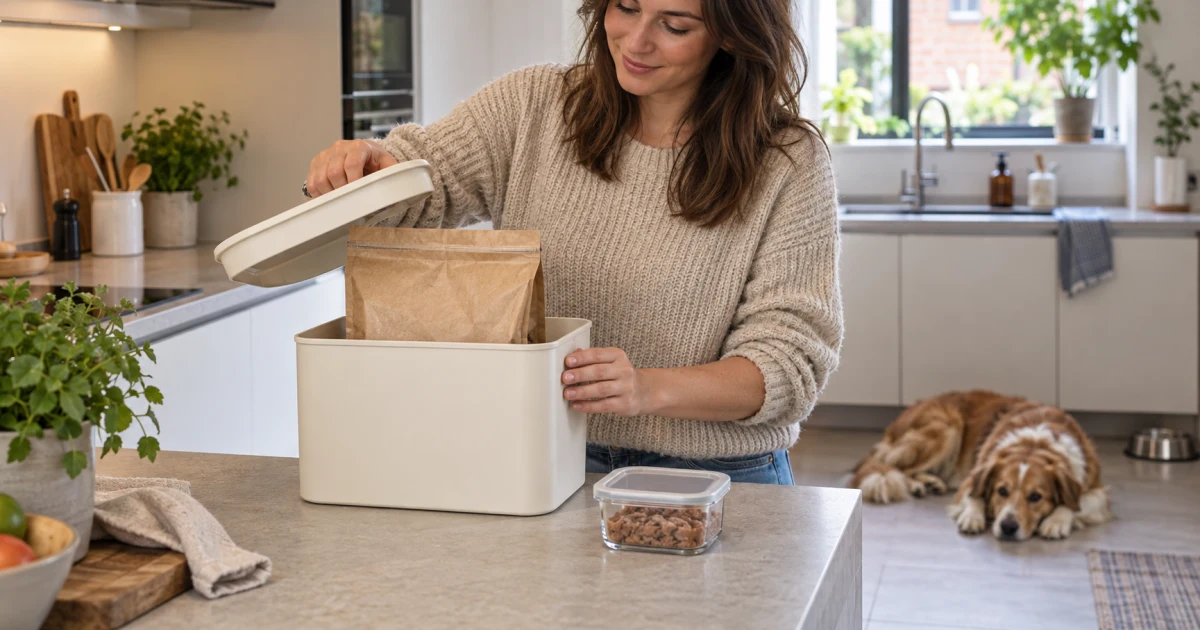
Preparing a pet's meal often happens between other jobs: opening a pouch, filling a bowl, putting the shopping away. That everyday routine is exactly where a few clear arrangements help. For commercial dry and wet foods for dogs and cats, the aim is simple: know which product you are using, where it belongs and which instructions apply once it has been opened.
Keep the bag and its details
Keep the original bag with its product name, batch number and date. The FDA suggests placing that bag inside your storage bin. Wash and dry the bin between bags.[en-1]
Think of your supplies as a small information file as well as a food store. A readable photograph of the label can help you find a reference while you keep the bag. If several people feed your pet, make it clear which pack is currently in use. Nobody should have to guess which bag to reach for when the next meal comes around.
Give dry food a regular home
UK Pet Food, the manufacturers' trade association, recommends a cool, dry storage area. Heat and moisture are unhelpful for preservation, and closing the pack properly after use is part of good storage practice.[en-2]
Look around your kitchen before buying another container. Is your chosen spot easy to reach and close again? A regular place makes the daily action simpler. You could reserve one space for the opened pack and another for unopened supplies. That lets everyone see what is left without opening several bags to find the one being used today. The arrangement should make sense to the people who actually prepare the meals.
Refrigerate unused wet food promptly
For canned and pouched wet foods, the FDA recommends promptly refrigerating unused leftovers under a close-fitting cover, or discarding them. When shopping, it also advises avoiding visibly damaged packaging.[en-3]
Get the lid or storage container ready before serving. There will be less to search for with an open tin in front of you. A note recording the opening date and time gives whoever prepares the next meal a useful reference. It helps them apply the manufacturer's instructions; it does not create a new storage deadline of its own. Agree where to put the note so that everyone can find it.
Read the instructions for this particular product
Follow the pack for storage conditions and the time allowed after opening. UK Pet Food emphasises respecting the stated limit for refrigerated food and asking the manufacturer about missing information. It also advises against returning food to the bag once it has been taken out.[en-4]
Do not automatically carry the instructions from a previous pack over to a different recipe. If a label is unclear, ask a specific question: how should this particular product be stored after opening, and for how long? Keep the answer with its details. That is useful when a friend or relative feeds your pet while you are away, because they need the same information you use at home.
Include cleaning in the routine
The CDC recommend washing hands before and after handling pet food, and regularly cleaning bowls, scoops, mats and feeding toys. An adult should supervise children when they wash their hands.[en-5]
Make that step visible in your household arrangements: who serves, who puts things away and who looks after the equipment? In our family-kitchen example, the evening helper might prepare what the morning helper will need. This does not require a complicated chart. It simply avoids everyone assuming somebody else has already done the job. An arrangement that everyone understands is more useful than an instruction forgotten at the back of a drawer.
Put empty packaging away too
An accessible food bag can be dangerous even when it appears empty: a pet can get its head trapped inside and suffocate. The FDA recommends keeping these bags and rubbish bins out of pets' reach.[en-6]
Think about the end of the meal as well as its preparation. A bag left by the door for just a moment sometimes stays there longer than intended. Decide beforehand where the waste will go. When someone else cares for your dog or cat, show them where packaging belongs as well as where the food is kept. It is a small, practical detail that is easy to explain during a handover.
Find the right information in Belgium
Belgium's food safety agency, AFSCA/FAVV, publishes a portal of recalls and warnings. Read the full notice to identify the affected products and the action requested.[en-7] If your pet becomes ill after eating a product, stop feeding that product and contact your veterinarian.[en-1]
Before calling, gather the packaging, product reference, batch number and your observations, without trying to make a diagnosis yourself. You can record the reply alongside the storage instructions. This small collection of information follows your everyday feeding routine: above all, it helps you hand over care, check a detail and ask the right person a focused question when something is unclear.
Sources and further reading
Sources consulted on 18 September 2026. UK Pet Food is a trade association; storage guidance was cross-checked with public health authorities.
- FDA, Proper Storage of Pet Food & Treats ↩
- UK Pet Food, Different types of pet food ↩
- FDA, Tips for Safe Handling of Pet Food and Treats ↩
- UK Pet Food, Healthy Feeding Guide: Part 2 ↩
- CDC, About Pet Food Safety ↩
- FDA, Keep Your Pets Safe from Snack Bag Suffocation ↩
- AFSCA / FAVV, Rappels de produits et avertissements ↩