
Children and dogs: let the dog choose when to interact
An attentive adult, calm movements and room to move: help children and dogs share everyday life without insisting on strokes or cuddles.
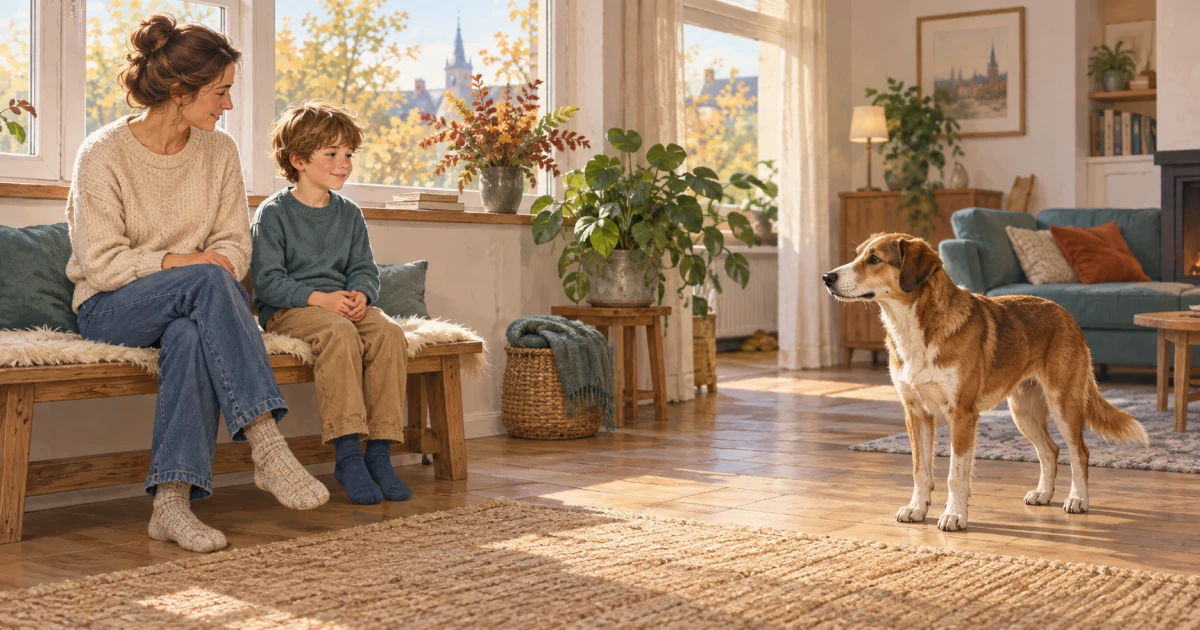
A school friend comes over to play. Almost as soon as they arrive, they spot the family dog and ask to stroke them. Before answering, there are a few practical choices to make: who will guide the meeting, where can it take place, and what will happen if either of them would rather do something else?
This ordinary scene is a useful starting point. In Belgium, as elsewhere, welcoming children into a home with a dog calls for concrete preparation. The aim can stay simple: an enjoyable time together, even if nobody touches the animal.
An available adult, not just someone in the room
Dogs Trust recommends staying close, paying attention and intervening as soon as a problem appears. If the adult is busy or distracted, separate child and dog, for example using different rooms or a suitable gate. Simply being in the same room is not enough.[en-1]
Before visitors arrive, agree which adult will take this on. ‘I’m watching the children’ is more specific than a shared ‘we’re keeping an eye out’. Plan the changeover if the phone rings or a pan needs attention, rather than relying on a few quiet minutes.
An invitation can go unanswered
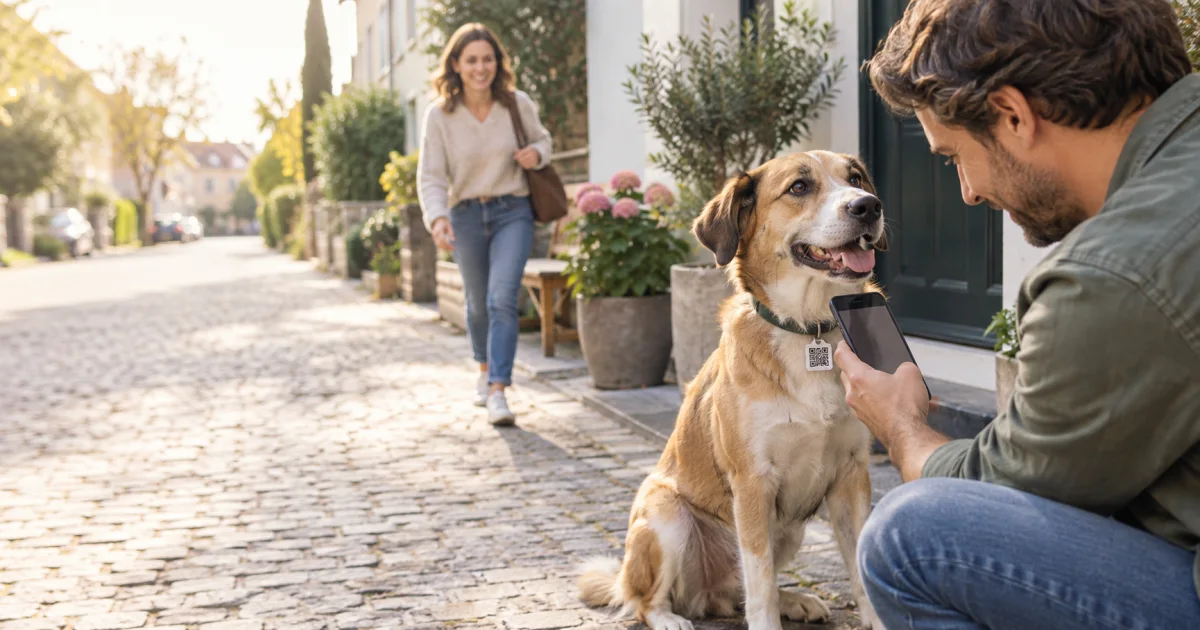
To greet a less familiar dog, ask their owner first. Then let the dog choose whether to approach. If they come over looking relaxed, a brief stroke on the shoulder, without leaning over them, can be followed by a pause. Respect their choice if they stay away or leave.[en-2]
You could tell the child: ‘They don’t have to say hello the way we do.’ This is neither a popularity contest nor a reward to earn. A meeting that ends without stroking the dog can still make a happy story to tell at home.
Times when the dog needs to be left alone
Meals, treats, a favourite toy, sleep and rest call for space. The RSPCA also recommends a quiet place where the child leaves the dog undisturbed. Avoid arms around the neck, faces close to the muzzle, pulled ears and games that involve climbing on the dog.[en-3]
Show this space before the visit, using familiar words: ‘This is where they rest.’ It need not become a mysterious area or a challenge. The same arrangements apply to your own child and to visiting friends.
Look at the whole body and the situation
A wagging tail does not, on its own, prove that a dog welcomes contact. Consider the whole body and context: turning away, lip licking or moving off may signal discomfort. An isolated signal does not always have the same meaning, and reactions do not all follow a predictable progression.[en-4]
The aim is not to turn a child into an expert. The adult makes the decisions; the child can learn to notice a movement without having to label it. ‘They moved somewhere else’ is a more useful observation than a verdict about a supposedly good or bad dog.
A growl calls for a pause, not punishment
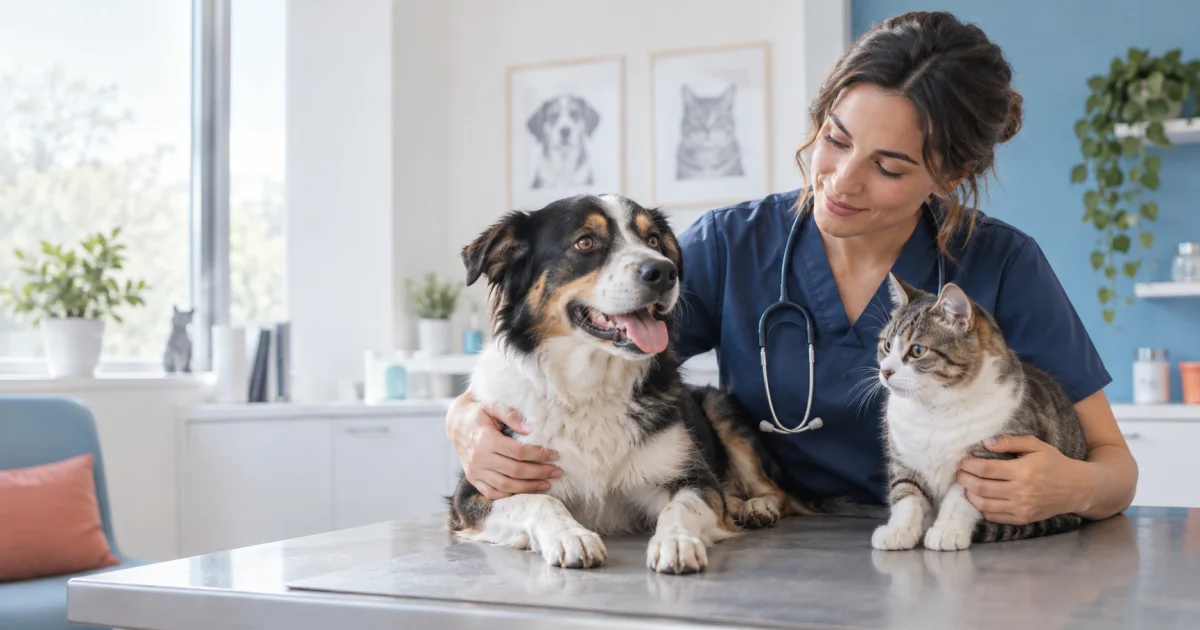
If the dog shows fear or growls, end the situation making them uncomfortable. Do not punish them or force the meeting. A change in behaviour, especially a sudden one, calls for prompt contact with your vet, who can investigate pain and suggest appropriate behavioural support.[en-5]
To prepare for that conversation, note what happened before and afterwards, without recreating the situation to get a video. These notes describe the event; they are not a way to make your own diagnosis or design a behaviour modification programme.
Learning can happen without the dog present
Blue Cross points out that children can forget instructions: explanations therefore never replace active supervision.[en-6] Choose a quiet moment away from the animal to talk about a future visit with a book, drawing or soft toy.
Here is a small discussion game to adapt to your family: invent a character who wants to greet a dog, then let the child choose what happens next. Ask what that character might say to the adult. There is no score to achieve; you are finding words together that will be easy to use when the time comes.
Plan a visit that does not depend on meeting the dog
Dogs Trust’s guide recommends giving dogs time to settle after stimulating events, including a visitor arriving.[en-7] Avoid treating each new friend’s arrival as another demonstration that has to go well.
For your next invitation, prepare an activity for the children that exists independently of the dog: drawing, building or reading. This gives the afternoon a purpose even if the meeting with the animal is brief or does not happen. Afterwards, talk with the other adult about what felt straightforward and what needs a different arrangement.
A happy memory does not have to be a photograph of a cuddle. It can be an afternoon when everyone had their own space, the child felt heard and the dog was able to make choices.
Sources
Accessed on 15 September 2026. General prevention advice; individual difficulties call for appropriate professional support.
- Dogs Trust, Dogs and children: supervision and separation. ↩
- Blue Cross, How to approach a dog. ↩
- RSPCA, Children and dogs: rest and interactions. ↩
- Dogs Trust, How to understand your dog’s body language. ↩
- PDSA, Dog aggression: responding appropriately and seeking veterinary advice. ↩
- Blue Cross, Being safe around dogs. ↩
- Dogs Trust, Living happily together: grown-ups’ guide, including recovery time on p. 18. ↩